

This exclusive piece delves into extraordinary interviews and narratives from worldwide.
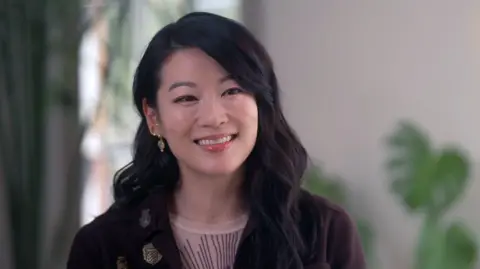
"{I disliked that I looked Asian, that I didn't have light-colored eyes and blonde hair, because that's what was beautiful at the time," reveals the actress, who voiced Rumi in Netflix's highly successful movie, the K-pop themed animation.
The performer, forty, recalls her childhood in Texas, as the eldest daughter of parents who emigrated from Korea and her journey toward belonging in American society.
In the movie, which tells the story of a female K-Pop trio who must save the world from evil forces, Rumi has to come to terms with her identity as a hybrid being – and when Cho first saw the screenplay, this resonated powerfully.
"Growing up in the US, identifying as American but having others view me like I'm not, trying to figure out my sense of self as an Asian-American, as a Asian-American, as a woman," she says.
These elements were aspects of her early life that mirrored Rumi's journey.
"Truthfully, at different points in my existence, I despised many parts of me and I longed to become a different person.
"During childhood, your surroundings influences who you become and I feel like I lacked exposure to enough people that shared my appearance."
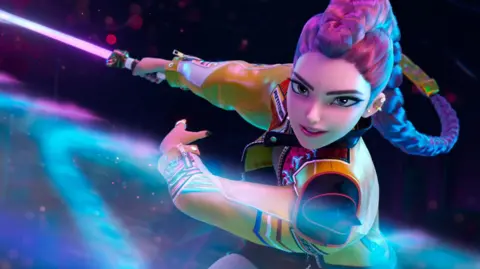
When it launched on Netflix in June, KPop Demon Hunters registered 33 million views in just 14 days, and secured the highest positions of the Netflix charts in dozens of nations. To star in the pioneering animation set in Korea, with Asian protagonists, was for her "a dream come true" – but it has also established her as a powerful role model for young Asian-Americans, the type that she lacked when in her youth.
She says many Korean-Americans have expressed it's "such a refreshing moment", making them proud for the first time of their dual heritage and cultural roots.
"I feel like K-Pop really, truly, has paved the way. Korean cosmetics has had such a big impact on Korea being loved. But I believe this movie is the one that pushed it further, of, everybody wants to go to Korea, currently," Cho says.
But the film's success was uncertain and the actress says she felt the production crew were "occasionally struggling against odds".
"It seems it's unfortunate to mention this, but whenever there's an Asian-led project, people feel like it's a risk," she says.
So, when she took on the role, she took steps to connect with everyone working on the film face-to-face, she adds.
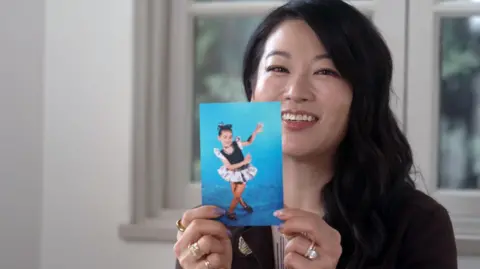
The film was released against the backdrop of increased immigration raids in the US as part of mass deportation efforts, which sparked protests in numerous regions.
As an Asian-American living in the US "it's heartbreaking and disappointing," she states. "Immigrants have shaped the nation."
Korean news sources have suggested that up to 150,000 individuals from Korea without proper documentation, including those who were adopted, are among those who could be removed.
As an grown-up, Cho understood that the prejudice she had encountered when she was younger stemmed mainly from a lack of education, as people didn't know what it meant to be of Asian descent.
"However today, in this day and age, when I feel like the society and people ought to be more informed, it's deeply disheartening and at times it appears we feel so hopeless," she says.
Because of this, it's particularly meaningful, she says, that KPop Demon Hunters could bring "hope and joy and love to all these different communities".
"Perhaps this explains it became this movie of the summer, because we just needed positivity and a unifying element as one."
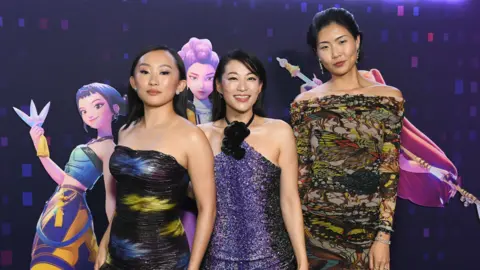
The growth of AI is a significant worry for the entertainment sector, creating the potential that in future it could be used to make a film like the animation.
Cho acknowledges she is aware that technology is already being used to copy actors' voices, but aims to "maintain faith in people" that audiences will still pursue human-made creativity.
"Sure, I believe there will be AI actors and singers. I know they're already here. I understand performers' voices are already being manipulated, but I trust people have some respect and want and love for something real."
The film has also been dominating the international music rankings, with multiple songs from its soundtrack featured on the Billboard Hot 100. It has its own fan creations, and viewers around the world are calling for a follow-up.
Cho reveals she wishes she could answer the question of whether that will happen – but both everyone involved will have to wait for the platform or the production company, which made the film, to give it the green light.
"I know rumors are circulating, the feedback is positive," she says. "So we shall see, and I think fans everywhere would protest if there wasn't."
- Starting conversations, building connections and challenging misinformation through articles, in-depth reports, interviews and extraordinary stories


